Tigua - Arte Primitivista Ecuatoriano
Publisher: Centro De Arte Exedra
Format: Hardback
ISBN: 9978780033
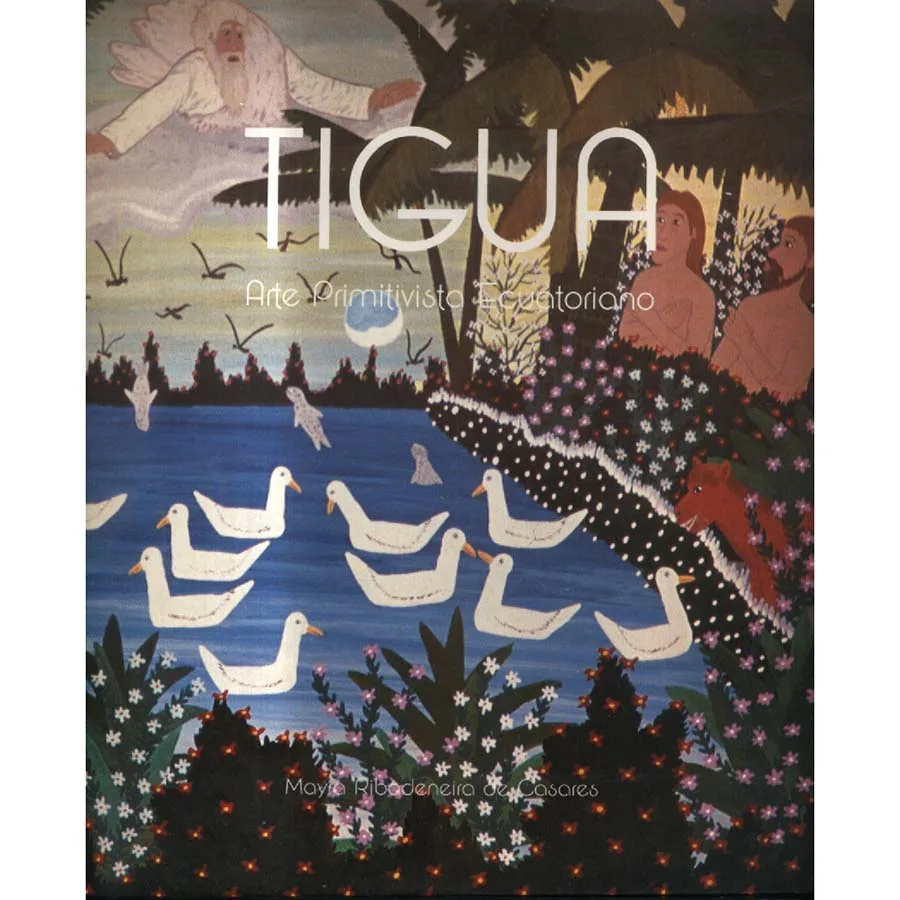
Tigua - Arte Primitivista Ecuatoriano is one of those marvellous art books that seems to arrive from an entirely different universe than the streamlined modern world of algorithmic feeds and beige minimalist interiors. This is colour, folklore, landscape, ritual, mountains, markets, festivals and imagination exploding gloriously across the page with absolutely no concern whatsoever for Scandinavian restraint.
The book explores the remarkable painted tradition of the Tigua region of Ecuador, whose vivid “primitivist” artworks transform everyday Andean life into something halfway between dream, memory and mythological theatre. Villages climb impossible mountainsides, animals wander through ceremonial scenes, volcanoes loom dramatically in the background and ordinary rural life acquires the atmosphere of sacred storytelling. Every image feels alive with movement and symbolism, as though the landscape itself might begin speaking if given enough paint.
What makes these works so compelling is their refusal to behave according to the tidy expectations of formal Western art history. Perspective wanders cheerfully where it pleases, colour operates according to emotional truth rather than realism and the boundary between folklore and daily existence quietly disappears. One begins to suspect that the painters understood something modern culture forgot long ago: reality becomes much more interesting once strict realism stops supervising it.
The irony, naturally, lies in the art-world term “primitivist”, a label historically beloved by sophisticated metropolitan galleries eager to admire “authentic” rural creativity from a safe distance while standing beside expensive wine. Meanwhile the paintings themselves possess a complexity, energy and cultural richness that often make supposedly more “advanced” contemporary art look faintly exhausted by comparison.
This is also simply a beautiful object. The sort of art book that rewards being left out on a table so visitors can casually discover it and immediately ask, “What on earth is this?” before disappearing into its pages for half an hour. It carries that slightly mysterious aura of specialised art publishing from the late twentieth century: scholarly enough to matter, but still deeply tactile and personal.
Condition-wise, this copy is structurally much better than the formal “Fair” grading might initially suggest. The pages and reading experience remain entirely good. The only notable issue is that, over time, the cover boards have very slightly splayed or “sprayed” outward, meaning the boards do not close perfectly flat when viewed lying down. In practical terms this is mostly cosmetic and barely noticeable unless inspected specifically from that angle. It shelves perfectly well and does not affect reading, handling or enjoyment of the book itself. One might even argue it has developed the relaxed posture of a well-travelled art volume that has spent years quietly contemplating Andean mountains.
A fascinating and visually rich book for lovers of Latin American art, folk traditions, outsider aesthetics, cultural history and anyone whose bookshelves could benefit from something far more alive than another grey corporate memoir.
Condition: Fair (see note above regarding cover boards), but otherwise a very enjoyable and attractive copy. Sold by Crappy Old Books, where obscure art history, unexpected beauty and slightly eccentric shelf behaviour are all part of the service.
Keep browsing: See more Art books Other books by Mayra Ribadeneira de Casares